

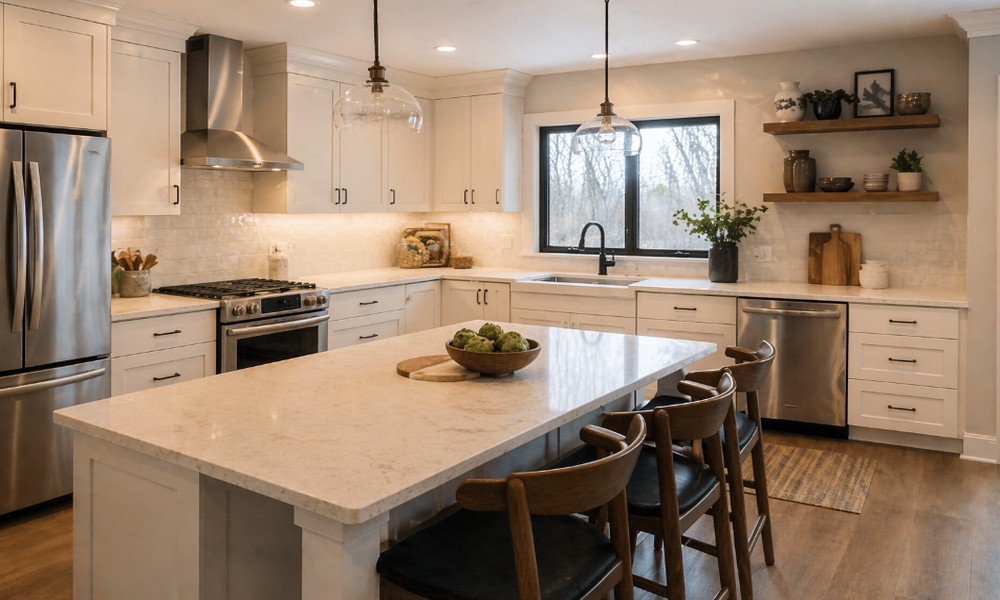
When people plan a kitchen upgrade, they often think about colors first. White cabinets. Warm wood tones. Black hardware. Maybe brushed gold handles or a clean modern finish. Those details matter, of course. They help set the mood of the room.
But the cabinet layout matters even more.
A kitchen can look beautiful and still feel hard to use if the cabinets are not placed well. You might have drawers that open into appliances, a pantry that is too far from the prep area, or a corner cabinet that becomes a black hole for things you forget about. It happens more often than people think.
Choosing the right cabinet layout for your kitchen is not only about style. It is about how the space works every day.
Start With How You Use the Kitchen
Before choosing a layout, think about your daily habits. This is one of the most important steps.
Do you cook full meals every day, or do you mostly prepare quick food and coffee? Do several people use the kitchen at the same time? Do you need space for kids to sit, guests to gather, or someone to work on a laptop while dinner is being made?
These small details matter.
A kitchen for someone who cooks often may need more prep space, deep drawers, and easy access to spices, pans, and utensils. A family kitchen may need better traffic flow and storage for snacks, lunch items, and everyday dishes. A kitchen used mostly for entertaining may need an island, drink station, or open serving area.
The best layout should fit real life, not just a photo you saw online.
Look at the Size and Shape of the Room
The shape of your kitchen will usually guide the best cabinet layout. Some layouts work better in narrow spaces. Others need a wider room. Forcing the wrong layout into the wrong space can make the kitchen feel crowded.
Common kitchen layouts include galley, L-shaped, U-shaped, and island layouts. Each one has strengths, but not every layout fits every home.
Galley Kitchen Layout
A galley kitchen has two parallel sides, often with cabinets and appliances facing each other. This layout is common in smaller homes, apartments, and narrow kitchen spaces.
The good thing about a galley kitchen is efficiency. Everything is close. You do not have to walk far between the sink, stove, refrigerator, and cabinets. For one main cook, this can work very well.
The challenge is space. If the walkway is too narrow, the kitchen can feel tight. Cabinet doors, appliance doors, and drawers need enough room to open without blocking movement. In this type of kitchen, every cabinet choice needs to be intentional.
Deep drawers, vertical dividers, and smart upper cabinet storage can help make a galley kitchen feel more useful.
L-Shaped Kitchen Layout
An L-shaped kitchen uses two connected walls of cabinets. It is one of the most flexible layouts because it opens up the rest of the room.
This layout works well for many homes because it creates a clear cooking area without closing off the kitchen too much. It can also leave space for a dining table, small island, or open walkway.
L-shaped kitchens are good for people who want the kitchen to feel connected to the living or dining area. They also offer useful corner storage, though the corner needs to be designed carefully. A lazy Susan, pull-out shelf, or angled cabinet can help keep that space from being wasted.
U-Shaped Kitchen Layout
A U-shaped kitchen has cabinets on three sides. This layout can offer a lot of storage and counter space, which is great for people who cook often or need a more complete work zone.
From a practical point of view, a U-shaped kitchen can keep the sink, stove, and refrigerator close together. It can also give you plenty of drawers, wall cabinets, and prep space.
But there is one thing to watch for. If the room is small, a U-shaped layout can feel closed in. Too many upper cabinets can make the kitchen feel heavy. In that case, mixing wall cabinets with open space, glass doors, or lighter finishes may help the room feel more balanced.
Kitchen Island Layout
Many homeowners want an island, and it makes sense. An island can add prep space, seating, storage, and a nice gathering spot. It can also hold a sink, cooktop, microwave drawer, or trash pull-out.
But an island only works if there is enough room around it.
If the island blocks walkways or makes cabinet access difficult, it can become frustrating. You should have enough clearance to move comfortably, open drawers, and use appliances without squeezing through tight spaces.
A smaller island that fits well is usually better than a large island that makes the kitchen feel crowded.
Think About the Kitchen Work Triangle
The kitchen work triangle connects the sink, stove, and refrigerator. These are usually the three busiest areas in the room.
You do not need to follow this idea too strictly, but it is still helpful. These three areas should feel connected and easy to move between. If the refrigerator is too far from the sink, or the stove is blocked by an island, the kitchen may feel awkward.
A good layout makes cooking feel smooth. You can wash, prep, cook, and clean without crossing the room too many times.
Plan Storage Around Real Items
A smart cabinet layout is not just about having more cabinets. It is about putting the right storage in the right place.
Think about what you actually use every day. Pots and pans should be near the stove. Plates and glasses are often best near the dishwasher. Spices should be close to the cooking area. Trash and recycling should be near the sink or prep space.
You may also need storage for:
- Baking sheets
- Small appliances
- Food containers
- Cleaning supplies
- Cutting boards
- Coffee items
- Pantry goods
- Serving dishes
When everything has a proper place, the kitchen feels easier to use.
Do Not Ignore Corner Cabinets
Corners can be tricky. If they are not planned well, they become wasted space. Items get pushed to the back and forgotten.
Good corner cabinet options include lazy Susans, swing-out shelves, blind corner pull-outs, or angled cabinets. These features can make hard-to-reach spaces much more useful.
It may seem like a small detail, but it can make a big difference over time.
Balance Style With Function
Style matters. The kitchen should look good and fit the rest of the home. But style should not come before function.
Open shelves may look nice, but they are not ideal for everyone. Tall cabinets can look dramatic, but they may feel too heavy in a small kitchen. A huge island may look impressive, but it may not work if it interrupts the flow.
The best kitchen design is the one that looks good and feels good to use.
Keep Your Budget in Mind
A more complex cabinet layout usually costs more. Extra corners, custom pull-outs, specialty drawers, large islands, and tall cabinets can all add to the price.
That does not mean you should avoid custom features. It just means they should be chosen carefully. Spend more on the details that improve daily use. Sometimes a simple, well-planned layout is better than a complicated design with too many extras.
Final Thoughts
Choosing the right cabinet layout for your kitchen comes down to fit. The layout should fit your room, your cooking habits, your storage needs, and your budget.
The best kitchens are not always the biggest or most expensive. They are the ones where everything feels like it belongs. Drawers open where you need them. Cabinets hold what you use most. The room feels easy to move through.
That is what makes a kitchen work well every day.
This post was written by a professional at The French Refinery. The French Refinery specializes in custom kitchen cabinets, bathroom cabinets, and full home cabinetry in Tampa, FL, Clearwater, and St. Petersburg, FL. With over 100 years of combined experience, our team designs, builds, and installs premium custom cabinets, millwork, and casework for homeowners, builders, and interior remodeler St Pete. From kitchens and bathrooms to closets, mudrooms, entertainment centers, and home offices, we create high-quality, handcrafted solutions that elevate your space and bring your vision to life.