

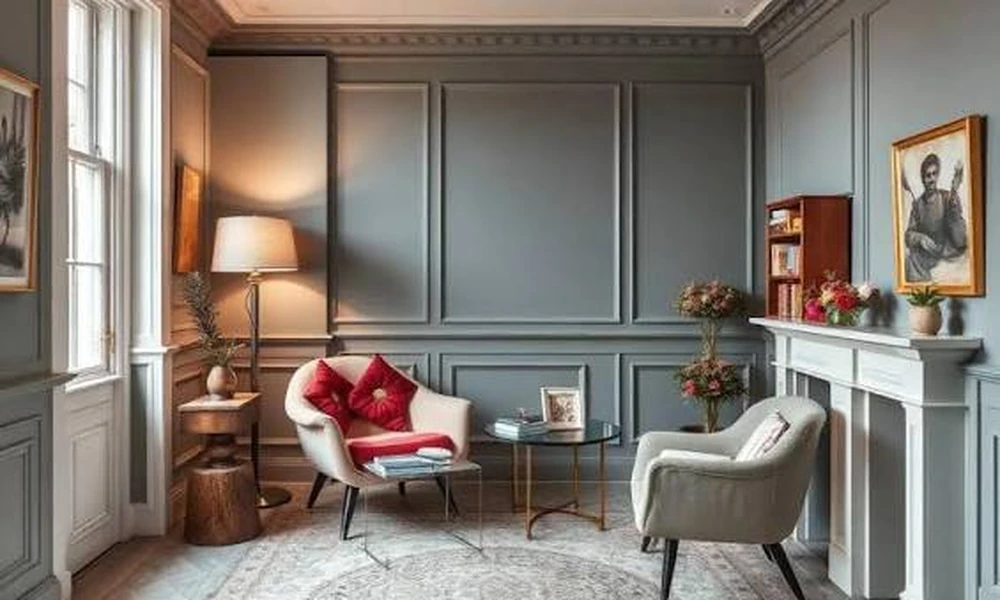
Budget between £300 and £900 for a single room in London. Most homeowners settle nearer £500 once labour, paint, and basic prep are factored in. That’s the honest headline figure. The real answer depends on the room itself, though, and the gap between a cheap box room and a large period reception room can easily run into four figures.
Labour Is Where Your Money Goes, Not Paint
Tins of emulsion rarely explain a painting bill. A decent trade paint costs roughly £30 to £50 a tin, and a normal room needs two or three. Labour eats up nearly all the rest. Working on a per square metre basis, expect around £15 to £25 per m² of wall, labour only, once you’re inside the M25. Outside London, that figure drops closer to £10 to £18. A 15 square metre bedroom wall area, for comparison, sits somewhere in the middle of that range once you factor in a normal amount of filling and sanding beforehand.
Room Size Changes the Maths Completely
A tiny box room or a small bathroom, the sort you’d struggle to fit a double bed into, usually costs £250 to £450 to paint properly. A standard bedroom or a single reception room in a Victorian conversion, something in the region of 12 to 15 square metres, typically lands between £450 and £800. Push into a large living room, an open-plan kitchen diner, or anything with a bay window and high ceilings, and the number climbs to £800 to £1,500, sometimes more if coving and multiple woodwork surfaces come into play.
Whole properties scale up from there. A one- or two-bedroom flat generally costs £2,300 to £4,500 for a full interior repaint, while a three bedroom terrace with hallway, landing, and stairs often runs £2,900 to £4,800.
Your Postcode Genuinely Affects the Price
London isn’t one single market. Decorators working in Zone 1 and Zone 2, where parking is a nightmare and travel eats into the working day, tend to charge nearer the top of the range. Head further out towards Zones 5 and 6, and day rates soften slightly simply because overheads are lower and competition among local tradespeople is stiffer. A job in Chelsea or Islington won’t cost the same as an identical job in Croydon or Romford, even with matching square footage and the same finish.
Old Plaster Costs More to Paint Than New Plaster
Preparation, not painting, is usually the part that inflates a quote. Georgian and Victorian properties across boroughs like Hackney and Lambeth often have uneven walls, old cracks, and years of built-up paint layers that need filling, sanding, and sometimes stripping back before a fresh coat goes anywhere near them. A newly plastered wall in a modern build needs a mist coat and two topcoats instead, which is faster but still adds a step that a previously painted wall doesn’t need. Either way, the walls themselves, not the room size, often decide how many hours a decorator actually bills.
Ceiling Height and Coving Push Costs Up
A standard 2.4 metre ceiling is quick work. Anything above 3 metres, common in converted period flats with the original proportions kept intact, needs scaffold boards or a proper tower rather than a stepladder, and that adds both time and occasionally a separate charge. Ornate coving and ceiling roses slow the job further, since cutting in around detailed plasterwork takes real care and no roller can rush it.
How Many Coats Actually Get You There
Two coats cover most jobs where the new colour is close to the old one. Going from a dark feature wall back to white, or the reverse, sometimes needs three coats for full, even coverage. That third coat isn’t a sales tactic. Skipping it on a big colour change leaves patchy, uneven results that show under any decent light.
Day Rate Pricing Versus a Fixed Quote Per Room
Decorators in London typically charge a day rate of £250 to £450, rising toward £650 for specialist or heritage work on listed buildings. That structure suits whole-house jobs booked over several days. For a single room, a fixed price usually works out better, since it forces the tradesperson to commit to a scope before starting rather than running the clock. Booking one room on its own, rather than as part of a bigger job, typically costs 15 to 25 percent more per room than the same space would cost inside a whole-house quote.
Premium Paint Brands Move the Number
Trade emulsion keeps costs down. Farrow & Ball, Little Greene, and similar designer brands cost three or four times as much per tin, and that difference alone can add well over £100 to a single room if you’re set on a specific heritage shade.
Getting a Quote You Can Actually Trust
Collect at least three quotes before booking anyone. Compare like with like: same number of coats, surfaces, paint supply arrangement. A number that looks unusually low on paper often means prep work or woodwork sits outside the scope, only to reappear later as an extra once the job is already underway. Ask each decorator to walk the room with you and point out anything they expect to add time, whether that’s a damp patch near the window or old wallpaper hiding under a coat of paint.
What This Means For Your Budget
Somewhere between £300 and £900 covers most single rooms in London, but the room’s condition, its size, and postcode all pull that figure in different directions. Get the walls properly assessed before you accept a number, ask what’s included in plain terms, and treat any quote that skips the details as one worth double-checking rather than booking on the spot.