

Background
Most homeowners assume that cracks in a concrete driveway are just an unavoidable cosmetic flaw, something that shows up with age and doesn’t mean much beyond an eyesore. That assumption holds up fine until the crack widens, water starts pooling in it, and the surface around it starts to crumble. In reality, a crack is often the visible endpoint of a process that began well below the surface. Soil movement, water infiltration, and temperature swings all play a role long before the concrete ever shows a line.
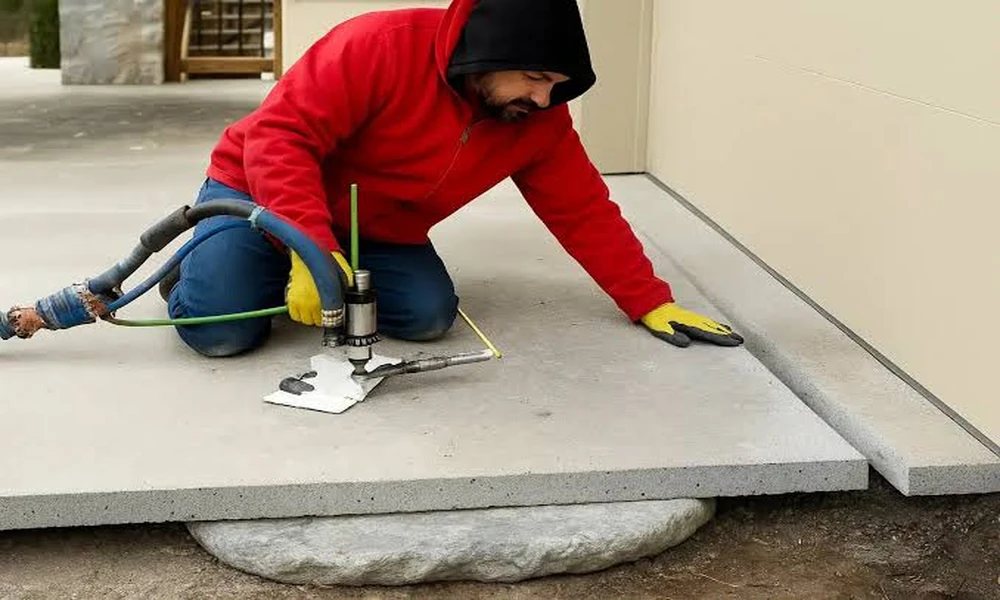
Concrete driveways are engineered to handle a certain amount of stress, but they are not immune to the ground shifting beneath them. Calgary’s climate, with its rapid freeze-thaw cycles, puts driveways through repeated expansion and contraction that most homeowners never see happening. Over a few winters, that cycle can turn a hairline crack into a structural problem. Understanding this process changes how people think about repair timing and prevention.
This matters more in Calgary than in milder climates, since the freeze-thaw cycle here can repeat dozens of times over a single winter instead of settling into one long cold stretch. Each cycle adds a small amount of stress to any existing weak point in the concrete, whether that’s a hairline crack, a poorly finished joint, or a section poured over uneven sub-base. None of this happens overnight, which is part of why the assumption about cracks being purely cosmetic persists. The damage accumulates slowly enough that most people don’t connect the dots until the crack has already become a real structural concern.
What the Research Shows
Research from concrete engineering studies backs up what many contractors have long argued anecdotally. Small cracks rarely stay small once moisture gets involved, because water expands when it freezes and applies pressure from the inside out. Studies on residential concrete surfaces consistently point to inadequate drainage and poor sub-base preparation as the two most common precursors to significant cracking. Even driveways poured to a high standard can develop these issues if water isn’t directed away from the slab.
The data also suggests that timing matters more than most people realize. Addressing a small crack early, before winter sets in, tends to cost far less and produce better long-term results than waiting until the damage spreads. For homeowners in Calgary dealing with early-stage damage, fixing a cracked driveway before the next freeze cycle can prevent a manageable repair from turning into a full slab replacement. Contractors who specialize in residential concrete repair often see this pattern repeat: a $200 fix ignored for two years becomes a multi-thousand-dollar overhaul.
Beyond timing, material choice affects durability. Studies comparing sealant types show that flexible polymer-based fillers perform better than rigid patching compounds in climates with frequent temperature swings, because they can move with the slab instead of cracking again under stress. This difference shows up repeatedly in field data from cold-climate regions, where rigid repairs fail at a noticeably higher rate within the first two years.
Practical Takeaways
For homeowners trying to decide what to do next, the research points toward a few consistent practices. Inspecting the driveway each spring and fall, after the harshest temperature swings, makes it far easier to catch new cracking before it worsens. Clearing debris from existing cracks and keeping them dry during colder months reduces the amount of water available to freeze and expand.
Drainage deserves attention too, since standing water next to or on top of a driveway accelerates every other problem discussed here. Regrading a section of yard or adding a small drain near a low point can do more for long-term durability than any sealant on the market. For homeowners who want a technical reference point, Portland Cement Association guidance offers detailed information on mix design, curing, and joint spacing that most residential guides skip entirely.
None of this requires specialized equipment or a background in construction. A little consistency in inspection and a willingness to address small problems before they grow are what separate driveways that last twenty years from ones that need replacement after ten. The driveway sitting outside most homes gets used daily and taken for granted, but it responds well to the kind of basic attention outlined here.