

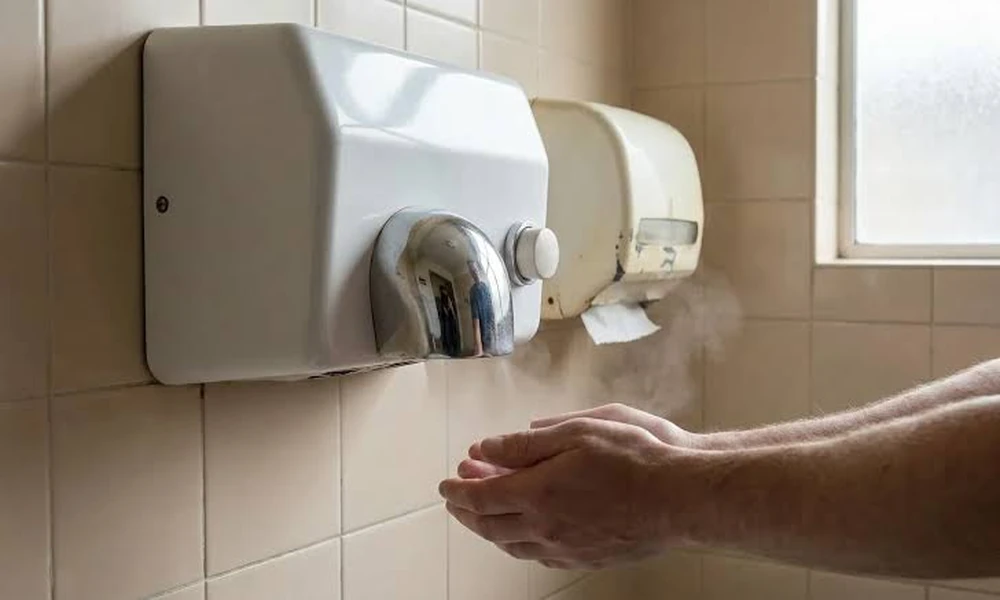
Hand drying is the final and most frequently rushed step in the handwashing sequence. Public health guidance stresses that germs spread more easily from wet hands than from dry hands, which makes drying as important as lathering (Centers for Disease Control and Prevention). Selecting the right drying system for each restroom is therefore an infection control decision as well as an operations decision.
Why does hand drying deserve its own analysis?
Hand drying deserves its own analysis because restroom users abandon the step quickly. When drying feels slow or inconvenient, people wipe their hands on clothing or leave with damp skin. Matching the drying method to the setting increases the chance that users finish the full sequence before touching door handles and other shared surfaces.
Which factors drive the drying decision?
Four factors typically drive the choice between drying methods:
- Peak traffic volume and how quickly users arrive in surges
- Clinical sensitivity of the surrounding space
- Maintenance staffing available for restocking
- Waste handling and sustainability goals for the building
How do coordinated accessory collections simplify the choice?
Coordinated collections simplify the choice by letting planners mix drying methods without mixing aesthetics. Manufacturers now organize accessories into six curated collections designed to work together, spanning hand dryers, towel dispensers, soap dispensers, and waste receptacles (American Specialties). A facility can place towels in one restroom and dryers in another while keeping a consistent look throughout the building.
Where do combination approaches work well?
Combination approaches work well in large venues. A restroom can include high-speed dryers for general use and a towel dispenser near the entry for users who prefer paper, giving every user a fast option without adding a second design language to the space.
How do clinical settings approach drying?
Clinical settings approach drying with an infection prevention lens. Comparative reviews have examined drying methods for drying efficiency, bacterial removal, and contamination of the surrounding environment (Mayo Clinic Proceedings). Healthcare facilities often weigh that evidence when choosing towel systems near patient care areas and dryers in public corridors or visitor restrooms.
Why does drying time matter in busy restrooms?
Drying time matters because users rarely wait longer than they expect. In restrooms with event-style surges, the drying station often becomes the bottleneck, so throughput per unit and the number of units installed have a direct effect on queue length and on how many users skip drying entirely.
How does drying method affect waste and sustainability?
Drying method affects waste because paper products make up a major share of the solid waste stream. Paper and paperboard accounted for about 23 percent of municipal solid waste generated in the United States in 2018 (Environmental Protection Agency). Buildings pursuing waste reduction goals often weigh energy use from dryers against disposal volume from towels when setting standards.
What maintenance data should owners track?
Owners should track restocking frequency, out-of-service incidents, and user complaints for each restroom. That data reveals whether a drying method fits its location or whether traffic patterns call for a different approach. Reviewing it each quarter lets facility teams adjust before small problems turn into recurring complaints.
How should noise be considered?
Noise deserves attention in restrooms that open directly onto quiet spaces such as libraries, clinics, or offices. Placement, door location, and unit selection all influence how much sound carries beyond the restroom.
How do user expectations differ by building type?
User expectations differ sharply by building type. Office tenants expect quiet, reliable fixtures that match the interior finishes, while stadium and transit users care mostly about speed. Schools need durable units that tolerate rough handling, while hospitality spaces often favor towels because they read as a premium amenity and point to a different drying mix.
What is the bottom line for planners?
No single drying method fits every room. Planners who match drying systems to traffic, clinical sensitivity, and maintenance capacity, while keeping a coordinated accessory family, deliver restrooms where users actually finish drying their hands.