

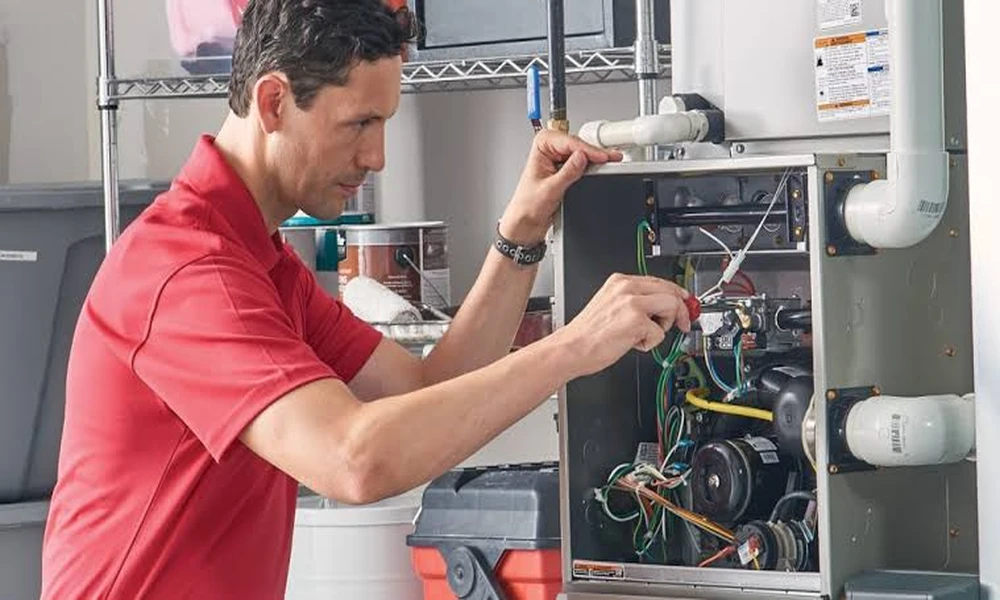
When a furnace fails, the Sequence often tells the story. A furnace can leave you with a strange kind of uncertainty. You hear it start, wait for warm air, and then wonder why it stops again. Or perhaps nothing happens at all. From the homeowner’s side, these symptoms can look almost identical. Understanding that progression changes the conversation with your technician. Instead of accepting a guess based on one symptom, you can expect the diagnosis to follow how the system is actually designed to operate.
Start With the First Sign of Trouble
When the furnace fails to heat your room, it does not necessarily mean the main component of your furnace has failed. First, the thermostat requests heat and the furnace’s controls recognize that request. If the system does not respond accordingly when the temperature drops, a diagnostic journey should start there.
That can involve checking:
- Thermostat operation and wiring
- The control signal
- Low-voltage power
- Stored diagnostic information
- The furnace’s initial response.
This approach prevents a common mistake: replacing a component simply because the furnace is not producing heat when the actual fault may be earlier in the process.
That’s why true professionals in Emergency Furnace Repair in Edmonton follow a sequential diagnostic logic to establish the root cause first, preventing the all-too-common mistake of swapping out expensive components simply because the system isn’t producing heat when the actual fault lives earlier in the line.
Follow the Safety Checks before Blaming the Ignition
Once a furnace receives a call for heat, modern equipment goes through several safety checks before allowing combustion. The inducer, venting system and pressure switch are part of that process. This becomes particularly important during Edmonton’s cold snap. A blocked or frozen vent, restricted intake or problem with the inducer can prevent the furnace from progressing to ignition.
A good technician follows the sequence rather than jumping ahead:
- Is the inducer operating correctly?
- Is the required draft being established?
- Is the pressure switch responding?
- Are the intake and exhaust paths clear?
That gives the homeowner something much more useful than “the furnace won’t light.” It identifies where the sequence stops and why.
Once Ignition Begins, Prove That Combustion Is Being Controlled
Suppose the burners light and you briefly feel hopeful, then the furnace shuts down again. That does not necessarily mean the repair is finished.
The furnace still has to prove that combustion has been established. The flame sensor provides an important part of that feedback to the control board. If the expected signal is not detected, the system can shut off the gas as a safety response.
This is where experience makes a difference. Instead of automatically replacing the flame sensor, a competent technician considers the surrounding conditions:
- Is ignition occurring correctly?
- Is the flame signal appropriate for the equipment?
- Is gas delivery within specification?
- Are the burners operating properly?
- Are the manufacturer’s requirements being met?
The objective isn’t simply to keep the flame burning. It is to understand why the furnace accepts or rejects the combustion it has established.
The Final Stages Reveal Whether the Repair Actually Worked
Successful ignition isn’t the ultimate goal, the furnace still has work to do. The blower must distribute heat through the home, operating temperatures must remain within the equipment’s intended range, and the system must shut down correctly when the heating demand is satisfied.
This is where measurements become more revealing than appearances.
A professional may assess:
For example, a furnace that repeatedly reaches its high-limit protection may technically produce heat while still having an underlying airflow or operating problem. A completed repair should therefore leave the whole operating cycle behaving properly, not simply leave the homeowner with warm air for the moment.
In essence, good furnace diagnosis is less about finding the most obvious faulty part and more about understanding where the system’s logic breaks down. For a homeowner, that is a valuable distinction. A technician who follows the equipment’s operating sequence can investigate with greater precision, avoid unnecessary replacements and leave you with a repair based on evidence rather than assumption.