

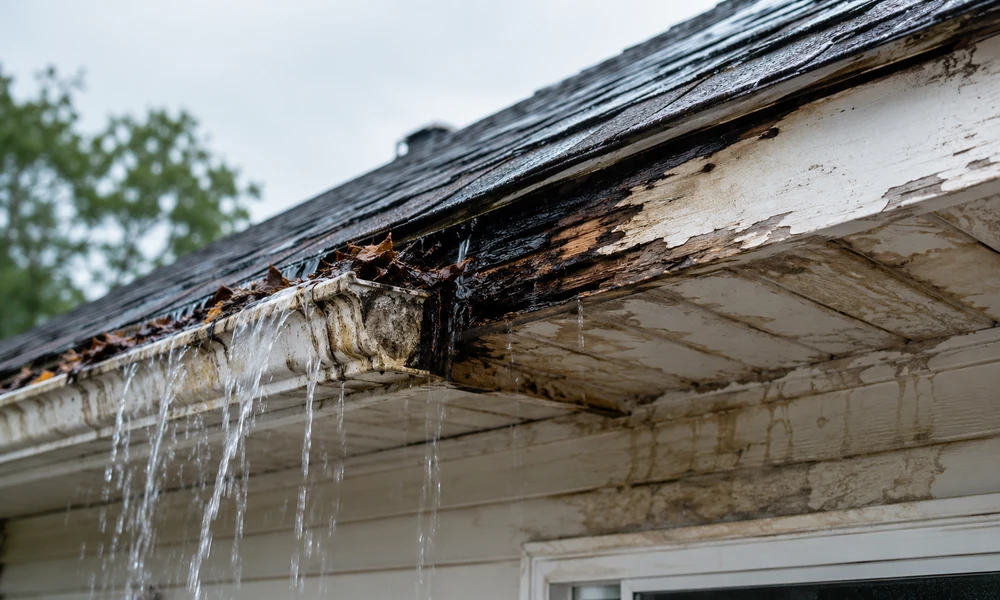
A gutter problem does not always stay confined to the gutter. Along the edge of a roof, gutters, fascia, soffits, roofing materials, and water-management details operate together. When rainwater stops following its intended path, signs of trouble can begin appearing on several parts of the roofline.
That is why an overflowing gutter, persistent stain, or loose section deserves more attention than its appearance alone might suggest. Understanding how these components interact can help homeowners identify the source of a problem before repeatedly treating only the visible symptom.
It Often Starts With Water Going Where It Shouldn’t
A gutter’s basic job is straightforward: collect water coming off the roof and direct it toward the downspouts. Trouble develops when something interrupts that path.
Leaves and other debris can restrict water movement. Gutters can also become poorly aligned, while leaks elsewhere around the roof edge can introduce moisture from another direction. The fascia service page being referenced here identifies clogged or overflowing gutters, roof leaks, moisture exposure, and improper installation among common contributors to fascia deterioration.
Instead of moving cleanly through the drainage system, water may spill over the gutter edge or reach areas behind and around the gutter. One isolated incident does not necessarily mean structural damage has occurred, but repeated exposure is worth investigating.
The important question is therefore not simply, “Is the gutter leaking?” It is, “Where is the water going when it leaks?”
Why the Fascia Is Caught in the Middle
The fascia is the horizontal board running along the lower edge of the roof. Besides contributing to the finished appearance of the roofline, it is closely connected to the gutter system and commonly provides the surface to which gutters are secured.
That location puts it directly beside one of the home’s main rainwater-management systems.
When water repeatedly reaches vulnerable wood rather than being carried away, exterior finishes can begin showing signs of trouble. The U.S. Department of Energy lists bubbled paint on fascia boards as well as warped or rotted fascia or soffit wood among possible indications of water intrusion around an attic and roof-edge assembly.
This is why simply repainting a discolored section may not solve the underlying problem. Paint can improve appearance, but it cannot correct an active drainage issue or restore wood that has already deteriorated.
Look at the Whole Roof Edge, Not One Component
Roof-edge problems are easier to understand when the area is viewed as a system.
For example, a gutter that has started pulling away from the roofline deserves investigation beyond tightening a fastener. The condition of the fascia behind the gutter matters too. Similarly, peeling paint or staining should prompt questions about what is happening above and around that location.
Useful warning signs can include visible decay, peeling or bubbling finishes, water stains, gutter movement, and deterioration around nearby soffit material. The presence of one sign does not automatically identify the cause, but several symptoms appearing in the same area can justify a closer inspection.
Homeowners should also avoid assuming that every roof-edge moisture problem originates inside the gutter. Roof leaks and other drainage details can contribute, which means identifying the water source is just as important as repairing the damaged material.
When Cleaning and Adjustment Are No Longer Enough
Routine maintenance can solve many gutter problems. Removing an obstruction, sealing an appropriate leak, or correcting gutter alignment may restore proper drainage when the surrounding materials remain sound.
The situation changes when the board supporting the roofline shows substantial rot, decay, or other deterioration.
At that stage, fascia board replacement may become part of the repair rather than repeatedly attaching or adjusting a gutter against damaged material. A proper assessment can determine how much of the board is affected and whether neighboring roof-edge components should also be examined.
This distinction matters because maintenance and material failure are different problems. Cleaning a gutter addresses an obstruction. Replacing deteriorated material addresses damage that has already occurred. Doing one while ignoring the other can leave the underlying cause-or its consequences-in place.
Fix the Cause Along With the Damage
Replacing damaged material without identifying why it deteriorated can set the stage for the same problem to return.
Once roof-edge damage is found, the drainage path should be considered as part of the repair. That can mean checking whether gutters are positioned and secured correctly, determining whether roof-edge water management is functioning as intended, and looking for evidence of leaks or recurring overflow.
Drip-edge details may also be relevant in directing water around the eaves. Building America guidance describes roof-edge assemblies in which the drip edge is integrated with other water-management materials to help limit water intrusion at vulnerable eave areas.
The goal is not to add every possible component to every repair. It is to determine how water reached the damaged area and correct the condition that allowed it to happen.
Conclusion
Some of the most useful exterior maintenance clues appear where different building components meet. The roof edge is one of those places.
A clogged gutter may begin as a routine cleaning issue, while persistent overflow, staining, deteriorated finishes, loose gutters, or damaged wood can indicate that the problem has progressed beyond simple maintenance.
Looking at the gutter, fascia, soffit, roof edge, and drainage path together provides a clearer picture of what needs attention. Addressing both the visible damage and the reason water reached that area is the more durable approach to protecting the roofline.